
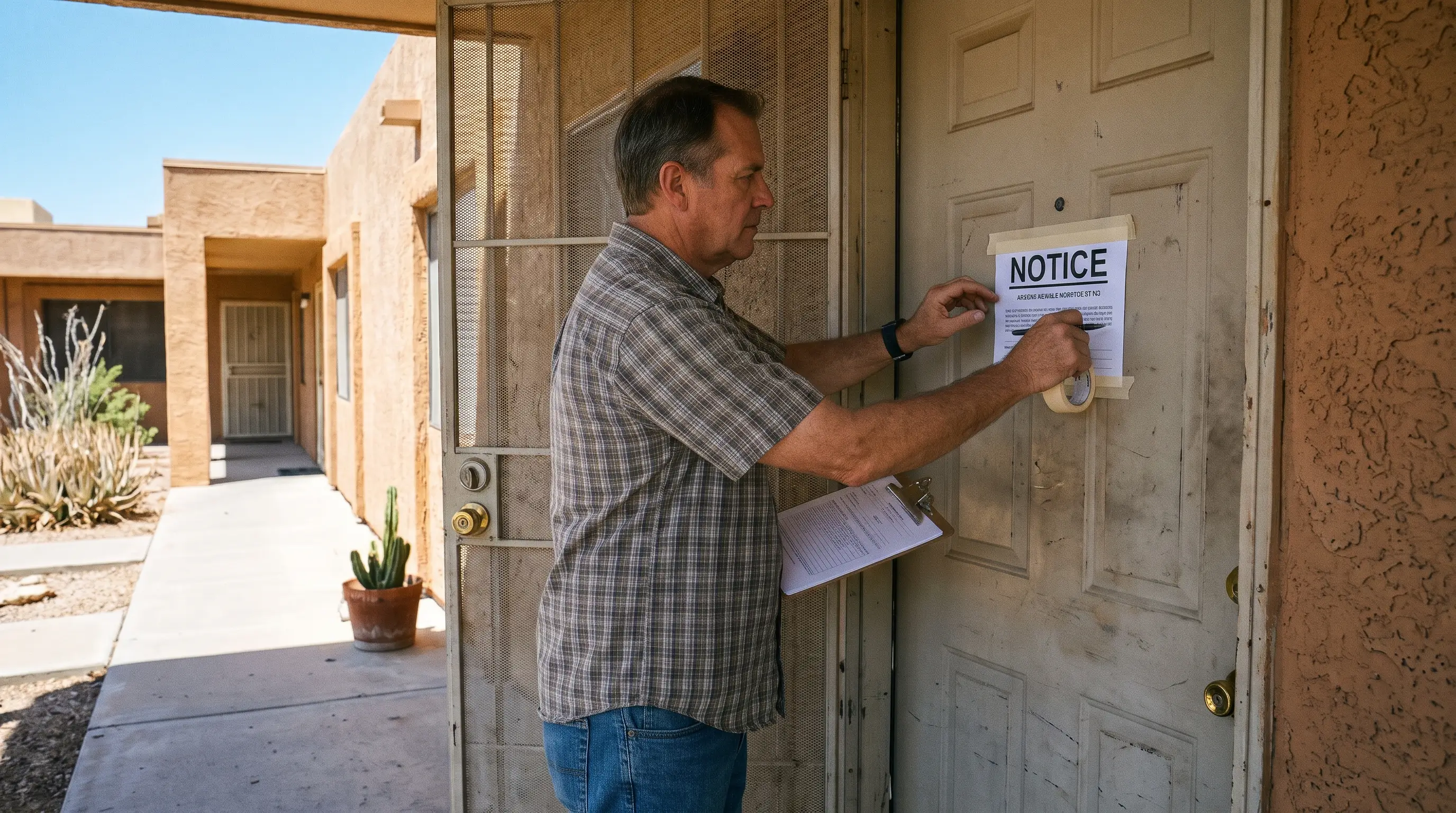
One missed rent payment can land in a courtroom faster than most owners expect. In 2025, landlords filed nearly 85,000 eviction cases through the Maricopa County Justice Courts, the second-highest total in county history. The Arizona Multihousing Association says about 96% of those filings were for unpaid rent.
Nearly every one of those cases started with a single written notice. For any Arizona landlord with a rental property in Avondale, that notice is the Arizona 5-day notice to pay or quit. Getting it right decides whether your case moves forward or stalls.
Let’s dig into how this notice works and what it takes to serve it the right way.
Key Takeaways
- Arizona landlords must give tenants 5 calendar days to pay or move out before filing for nonpayment.
- The notice should itemize rent and late fees separately, and late fees must be reasonable and in the lease.
- A tenant who pays in full before the case is filed has the right to keep the lease.
- Weekends and holidays count toward the 5-day deadline because Arizona uses calendar days.
What the Arizona 5-Day Notice to Pay or Quit Does
This notice is the official starting line for a nonpayment case under Arizona law. Here are the two jobs it does for landlords.
It Formally Starts the Clock on a Nonpayment Eviction Under A.R.S. § 33-1368(B)
The Arizona Residential Landlord and Tenant Act requires written notice before a landlord can evict for unpaid rent. Skip this step and the eviction process stops before it starts. Judges look closely at this notice in every eviction case.
Keep in mind that this day notice covers rent payment issues only. Other lease violations follow different rules. A tenant who violates the lease with unauthorized pets or false details on a rental application usually gets a 10-day notice to fix the problem. Illegal activity can justify immediate termination. The right notice depends on the type of lease breaches involved.
It Gives the Tenant a Choice Between Paying in Full or Moving Out
The tenant has five days to pay rent in full or leave the rental unit. If the tenant pays, the lease agreement continues as normal. If the tenant fails to do either, the landlord can file an eviction action in the appropriate court.
What a Valid Arizona Pay or Quit Notice Must Include
An eviction notice with missing details hands tenants an easy legal defense. Here are the elements that keep it enforceable.
Treat the notice like any other legal document. It should clearly show:
- The tenant’s full name and the rental property address
- The exact rent owed, including any past due rent from earlier months
- Late fees listed on their own line
- The date the notice was prepared
- The landlord’s or agent’s signature
Rent and Late Fees Should Be Listed as Separate Line Items
Lumping everything into one number invites confusion. Separating unpaid rent from late fees shows the tenant exactly what they owe. It also gives the judge a clean record if the case reaches a court hearing.
Late Fees Must Be Reasonable and Written Into the Lease
Arizona only allows late fees that are reasonable and spelled out in the lease or rental agreement. Adding a fee the rental agreement never mentioned can turn a solid case into improper notice.
The Arizona Supreme Court Publishes a Standard Form Landlords Can Use
The court’s standard 5-day notice form keeps your notice to pay in line with court rules. Local court requirements can vary a bit, so check with the justice court that covers your property.
How to Serve the Notice and Count the Five Days
Timing mistakes are an easy way to lose an otherwise strong case. Here are the service and counting rules that apply:
- Personal delivery is the fastest way to serve notice, and the five days begin once the tenant or a household member receives it.
- Many owners hire a certified process server, who provides signed proof of service in case the tenant later claims they never saw the notice.
- Arizona also allows registered or certified mail. Under A.R.S. § 33-1313, the tenant is treated as receiving it on the day they actually get it or five days after mailing, whichever comes first.
- Mailing the notice means your full notice period can stretch to about 10 days.
- Saturdays and Sundays count toward the five days, so weekends do not extend the deadline.
- A notice delivered on a Wednesday gives the tenant through the following Monday to act, so filing on that Monday is too early. Proper service and proper notice both depend on counting correctly.
TXC Realty AZ Property Management prepares and serves rent notices with close attention to Arizona’s service rules, so Avondale owners avoid costly setbacks in court. Get to know the TXC Realty AZ team and see how we protect your rental property from day one.
What Happens When a Tenant Pays After Receiving the Notice
Arizona law sets different rules depending on when the tenant pays. Here are the stages that matter:
- If the tenant pays all overdue rent plus reasonable late fees before you file, the lease stays in place and you can’t take legal action on that notice.
- Partial payments are trickier. Accepting less than the full amount without a written agreement can weaken your right to proceed, so check with an attorney first.
- Once you file the eviction complaint, the tenant must also cover filing fees and other court costs, plus attorney fees, on top of unpaid rent.
- Most Avondale cases go through the Maricopa County Justice Courts, while larger claims may belong in superior court. The court date usually falls within about a week of filing.
- At the eviction hearing, the tenant can raise tenant defenses like improper notice. The judge reviews both sides before the court proceedings wrap up.
- After an eviction judgment, reinstatement is up to you. Put any deal in writing, and if the tenant won’t leave, request a writ of restitution. This court order can issue five calendar days after judgment.
Frequently Asked Questions
Q: Does Arizona require a grace period before a landlord serves a 5-day notice?
No. A landlord can serve the notice as soon as rent is overdue under the lease.
Q: Can a tenant withhold rent if the landlord fails to make repairs?
Only through Arizona’s formal repair remedies. A tenant who simply stops paying can still receive a 5-day notice.
Q: Can a landlord change the locks if the tenant won’t pay?
No. Self help evictions are illegal. Only the sheriff or a constable, both law enforcement officers, can enforce a writ of restitution, and the tenant’s belongings must be held for 14 days afterward.
Stay a Step Ahead of Late Rent in Arizona
Arizona eviction laws reward landlords who follow every step. A correct notice served the right way keeps the legal eviction process moving. One small slip can send you back to day one and cost weeks of lost rent.
The proper eviction procedure also protects tenant rights while preserving landlord rights. That balance is what holds up in court. This article is general information, not legal advice, so consult an Arizona attorney about your specific situation.
TXC Realty AZ Property Management manages rent collection and the full Arizona eviction process for property owners in Avondale. Schedule a call with us and keep your rental income on track.